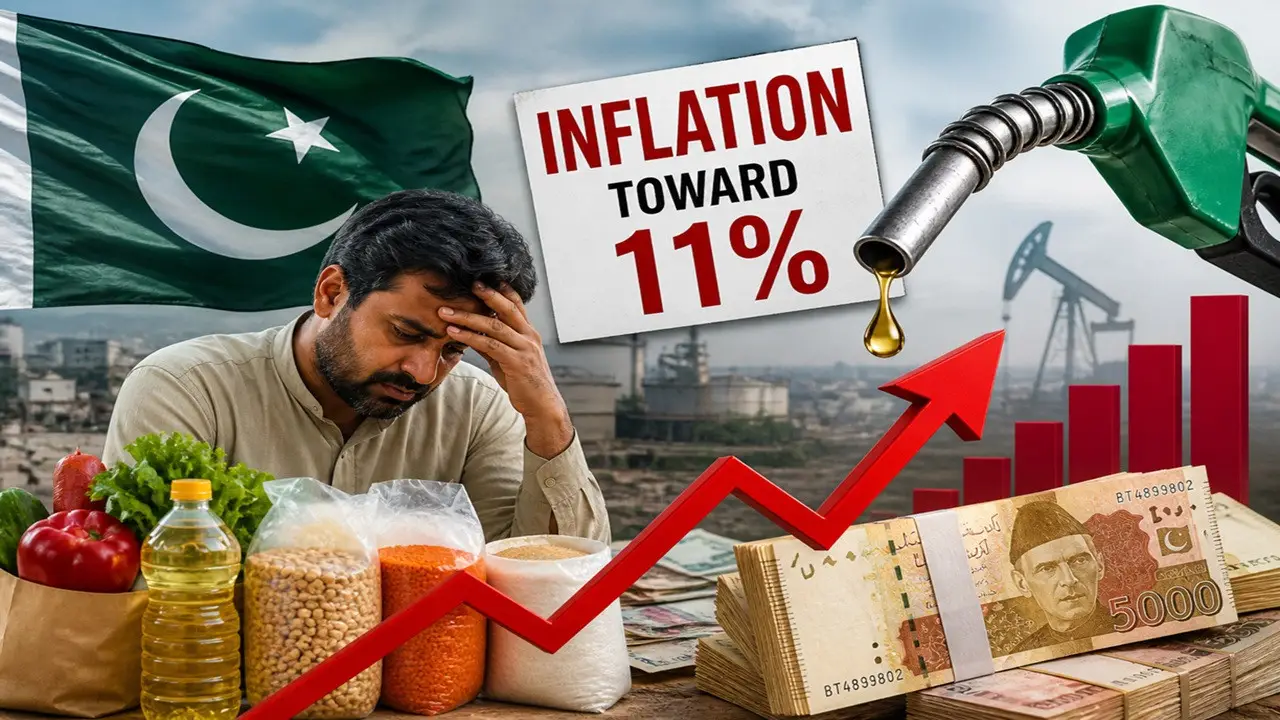
Pakistan Faces Economic Pressure as Oil Prices Push Inflation Near 11% (OpenAi)
Islamabad: The economic stability that Pakistan had achieved through two years of hard work seems to be wiped out in one fell swoop. The reason is the Gulf War, after the US-Iran conflict, oil prices are skyrocketing and Pakistan, which fulfills 80 percent of its oil needs through imports, is badly trapped.
PM Shehbaz Sharif himself revealed in the federal cabinet meeting that Pakistan's weekly oil import bill before the war was $300 million, now it has increased to $800 million. That means about $3.2 billion every month and $41.6 billion annually, if this pace continues, there will be severe pressure on foreign exchange reserves. Sharif said that this boom has destroyed all the economic hard work of the last two years.
Pakistan's inflation rate reached 10.9 percent in April 2026, the highest level in nearly two years. It was 7.3 percent in March, a jump of 3.6 percent in a month. CPI was 11.1 percent in urban areas and 10.6 percent in rural areas. The wholesale price index reached 13.6 percent.
On April 27, the State Bank of Pakistan increased the policy interest rate by one full percentage point to 11.5 percent. The prolonged Middle East conflict has kept global energy prices, freight charges and insurance premiums well above pre-conflict levels, the bank said. If oil remains at $120 per barrel, inflation may cross 11 percent and GDP growth rate may decline to 2.5-3 percent in FY27.
The Pakistani government is caught between two bad options, either pass on global oil prices to the public and face massive protests, or give subsidies and increase the budget burden. But there is no scope to increase expenditure under the strict monitoring of IMF. In April, the government sought approval for more subsidies from the IMF, but it was rejected.
The prices of petrol and diesel have been increased again from May 1, with petrol reaching close to Rs 400 per litre. Tomatoes have become costlier by 57 percent, fresh vegetables by 40 percent and eggs by 14 percent in urban areas. Diesel burns in trucks, buses, tractors and generators, meaning everything will be expensive, from food to transportation. The country which was celebrating getting back on economic track two years ago, is again standing at the same point today.




Copyright © 2026 Top Indian News